
Column

The role of patents
in toys
As this newsletter hits the (digital) doormat, children around the world are preparing for the holiday season. In the Netherlands and Belgium we follow the Sinterklaas news closely, while elsewhere children still have to be patient until Santa makes his appearance.
And of course, with Sinterklaas and Christmas come presents. Therefore, especially for this occasion, I took a look at the role of patents in toys throughout the past century.
The oldest example I came across is the yo-yo. A patent for this iconic toy was granted to James L. Haven and Charles Hettrick as early as 1866 (US 59,745). The patent writing covers only two pages, one of which includes illustrations - a great example of how a simple invention can have great impact.
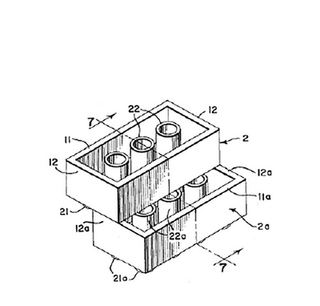
Another globally known toy that owes much of its success to patents is LEGO®.
The original patent from the early 1960s described the building block as “a hollow building block of rectangular parallelepiped shape [...].” This protection allowed LEGO to differentiate itself from competitors and lay the foundation for the global brand it is today (US 3,500,282).
During the same period, the first patent for the Barbie doll® was also granted. This patent focused on the doll's construction and, in particular, described how she could remain balanced despite the small number of contact points (US 3,009,284). Since then, it is estimated that more than 330 patents have been published protecting improvements and new parts of Barbie. It shows how a thoughtful IP strategy helps keep a product innovated and protected for generations.
The story of Playmobil® is another great example of how innovation and patents go hand in hand. Rising raw material prices in the 1970s made the production of large plastic toy products unprofitable. The owner of a German toy manufacturer therefore asked designer Hans Beck to develop a small, simple and affordable alternative. Thus was born Playmobil: small figurines that excite children to let their imaginations run wild. Several patents were applied for, for example for the technology behind the movable parts and the system by which the figures are clicked into vehicles (DE2205525).
Those who think that patents on toys are only a thing of the past are wrong. Even today there is plenty of innovation in the toy industry. For example, Nintendo now holds more than 8,000 patents, including several that protect components of the Nintendo Switch® (US 9,724,601).
So I am curious to see how many of these famous patented toy classics will be on gift night or under the Christmas tree this year!
We are also active in the field of toys when it comes to trademarks. Read our customer case about Hello Kitty here.
Want to know more?
Please contact Blijke Kroezen.
Share